The Jordan Beckett #1: When the Hobby Found Its Bible
Before comps, before pop reports, before anyone said the word 'asset,' there was a magazine on the counter of every card shop in America.
Coach Winn · August 2026 · 7 min read
Every hobby eventually needs a common language. Ours came in the form of a magazine you could buy for pocket change at the front counter.
Before the Beckett, a card was worth whatever the guy across the table said it was worth. You traded on instinct, on loyalty, on who wanted what more. Sometimes that was beautiful. Sometimes you went home knowing you'd been had, and there was nowhere to look it up.
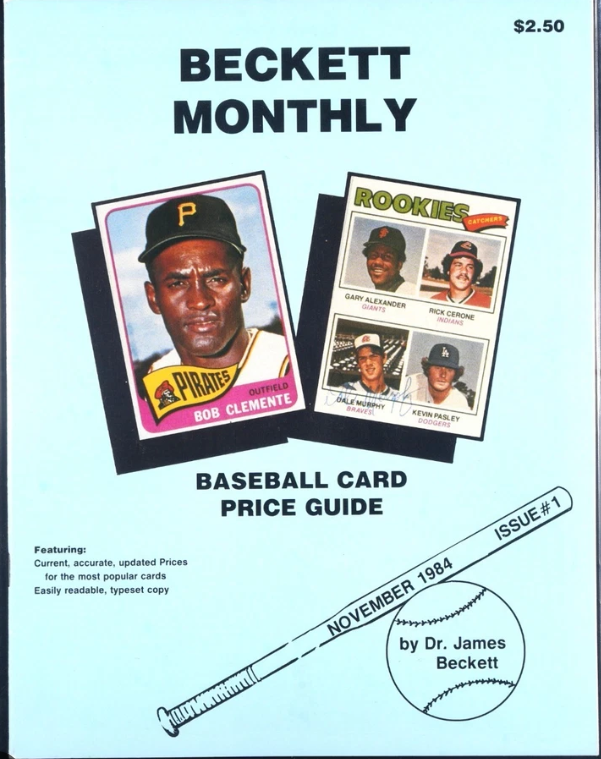
Dr. James Beckett III changed that. He was a statistician, not a salesman, and he did what statisticians do — he surveyed dealers, gathered data, and published it. By the time the first monthly magazine dropped in November 1984, the hobby had changed forever.
I still remember what it did to the room. The Beckett sat on the counter, usually curled at the corners, usually with somebody's finger holding a page. It was never really for sale — it was the reference copy. Kids leaned over it. Dealers argued with it. Nobody left the shop without checking something.
Once you were hooked, you waited for the new issue like it was a game day. Arrows were the whole story. Up arrow next to your guy and you walked taller all month. Down arrow and you told yourself the market was wrong.
“What does it book for? That was the only question that mattered on the schoolyard.”
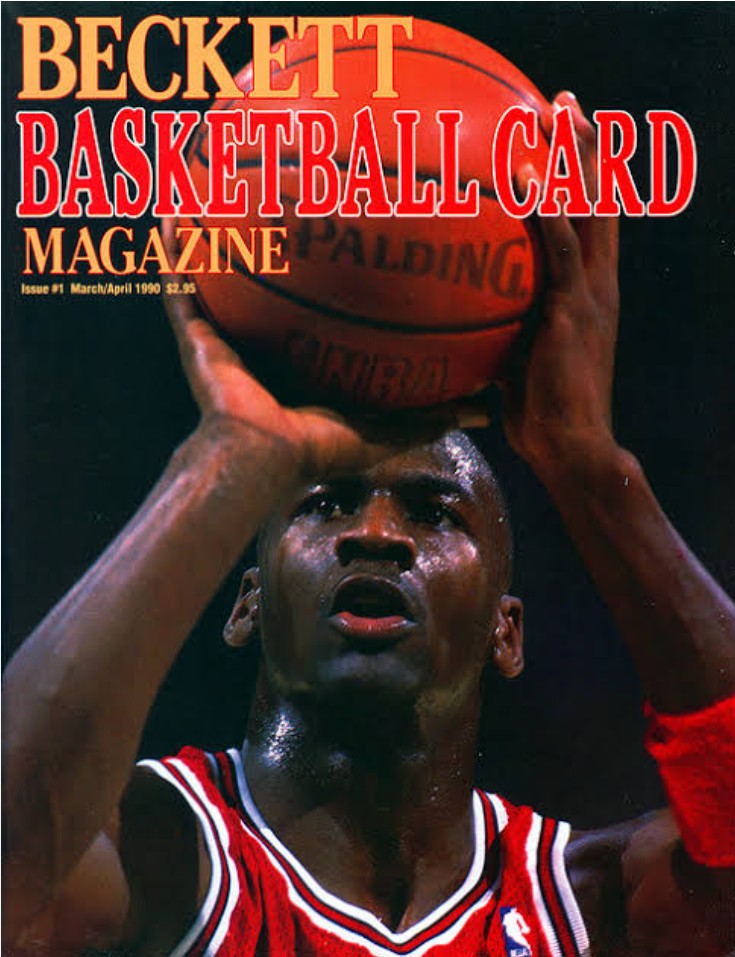
Baseball was still king through most of the eighties. Basketball cards were the stepchild — cheap boxes, thin shelf space, half the shops barely stocked them. And in the spring of 1990, the hobby shifted again.
Jordan on the cover of a first issue was not a marketing decision so much as an inevitability. He was the reason a generation of kids started buying basketball at all. Putting him on the front of a price guide made it official: this wasn't a side category anymore.
You flipped straight to the 1986-87 Fleer rookie. A hundred and fifty, maybe a hundred and seventy-five dollars, depending on the month and who you asked. We thought that number was astronomical. We sat in bedrooms with spiral notebooks adding up our 'net worth' one line at a time, and the gospel was Beckett.
What the Book Value Really Bought Us
People look back at book value now and laugh at it. Fair enough — it lagged the market, it was survey-based, and dealers gamed it. But that misses what it actually did.
- ·It gave a twelve-year-old the confidence to say no to a bad trade.
- ·It let a shop in Roanoke and a show in Anaheim speak the same language.
- ·It made the hobby feel legitimate to parents who thought we were wasting money.
- ·It put a shared reference point in every hand, which is more than the internet has managed to do.
Today you check sold listings, 130 Point, pop reports, and three marketplaces before you'll commit to a price — and you still argue about it. We had one number. It was imperfect, and it was ours.
The Beckett isn't what it used to be, but nothing from that era is.
The company survived by becoming a grader instead of a publisher, which is its own kind of story about where the hobby went. The magazine that told you what a card was worth turned into a service that tells you how good it is. Both answer the same anxiety.
Give the Man His Flowers

Dr. Beckett deserves his flowers. Not because he was always right about prices — nobody is — but because he treated collectors like people who deserved real information. He brought discipline to something that had run on rumor for decades.
Every price tool you use today is downstream of that decision. Every comp, every index, every 'last sold' number owes something to a statistician who thought kids trading cardboard deserved better data.
I still have my copies. The corners are soft, the arrows are ancient history, and the numbers are wrong in both directions. They're not worth much. They're worth everything.
“The Beckett wasn't a price guide. It was proof that what we cared about was worth writing down.”
If a magazine from 1984 or 1990 is still sitting in your closet, don't throw it out. It's a time capsule of what the hobby believed about itself. And if you're looking for pieces with that kind of history behind them, that's exactly what lives in the vault.
Share This Story
Pull-quotes sized for Instagram, Facebook, and X. Tap to copy.