The Holy Grail of Price Guides
How the Beckett #1 Michael Jordan cover shaped a generation of collectors.
For those of us who grew up haunting the aisles of local card shops in the late 1980s and early 1990s, the smell of cardboard and bubblegum is forever etched in our memories. It was an era of innocence and obsession, a time when our bicycles were our transportation to the nearest hobby store, and our allowance was instantly converted into wax packs. But in a world overflowing with Topps, Fleer, Donruss, and the revolutionary new Upper Deck, there was one thing we needed more than the cards themselves: we needed to know what they were worth.
Enter the price guide.
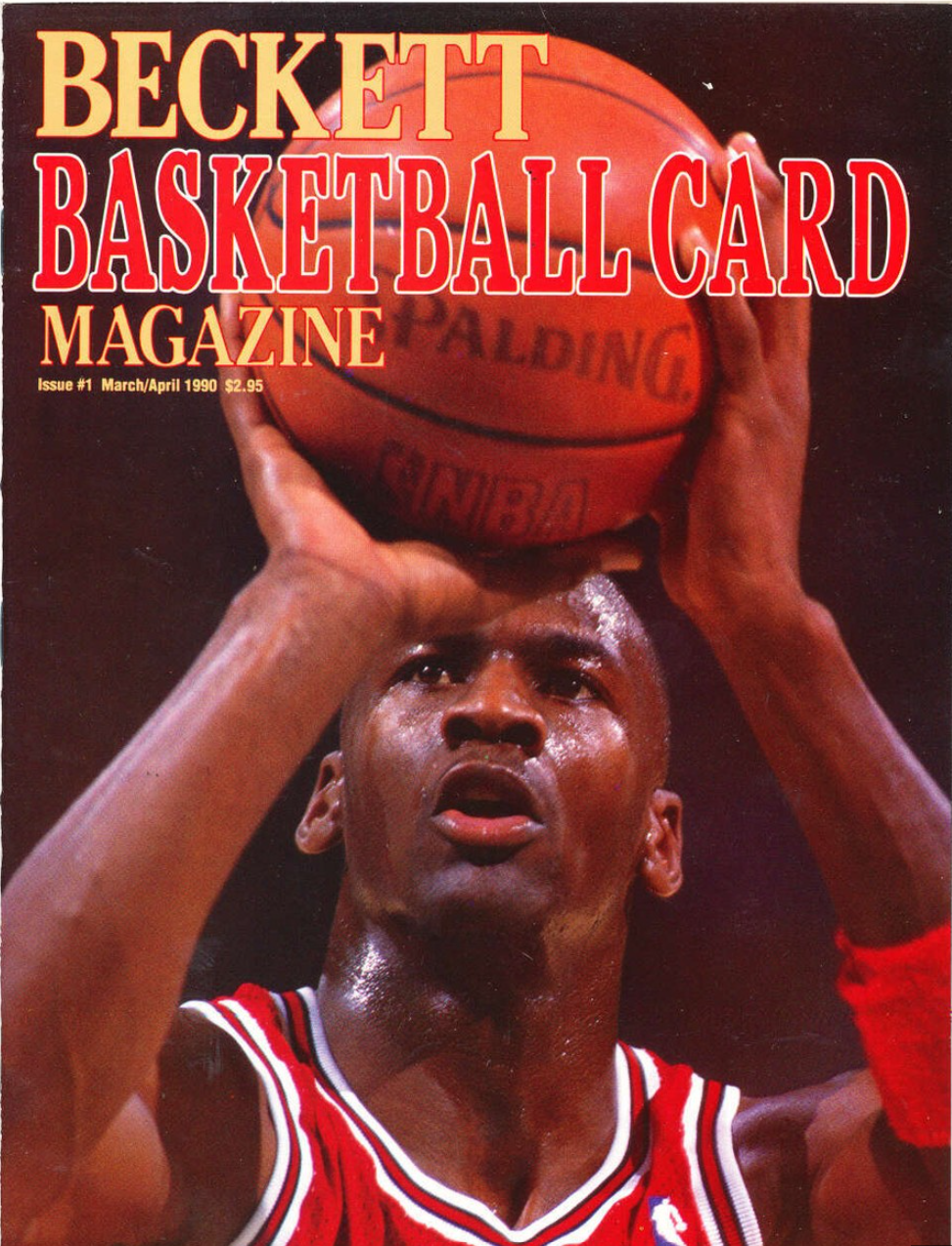
While Tuff Stuff was a beloved companion on our collecting journey — often bulkier and packed with multi-sport coverage — there was one undisputed king of the hobby. When Beckett hit the scene, it didn't just report the market; it was the market. And nothing cemented that legacy quite like the release of Beckett Basketball Card Magazine Issue #1 in March 1990, featuring a soaring Michael Jordan on the cover.
The Birth of the Cardboard Bible
To understand the impact of that Jordan cover, we have to look at the man behind the magazine. Dr. James Beckett III wasn't just a collector; he was a statistician who earned his Ph.D. from Southern Methodist University. In the late 1970s, he began surveying dealers and collectors to create the first comprehensive, data-driven price guide for baseball cards.
By November 1984, he launched Beckett Baseball Card Monthly. It was a revelation. Before the internet, before eBay, and before real-time sales comps, Beckett was the absolute authority. We would wait by the mailbox or rush to the card shop each month just to see those tiny up and down arrows next to our favorite players' names.
As the 1980s gave way to the 1990s, the hobby was exploding. Baseball was king, but basketball was experiencing a renaissance, driven largely by the global phenomenon that was Michael Jordan. Recognizing the shift, Beckett expanded its empire. In March 1990, they launched their first dedicated basketball issue.
The Issue That Changed Everything
There was only one logical choice for the inaugural cover of Beckett Basketball Card Magazine: Michael Jordan, captured in mid-air concentration, tongue likely wagging just out of frame.
For collectors like us, holding that magazine felt like holding a piece of history. It was validation that basketball cards — long treated as the red-headed stepchild to baseball — had finally arrived. Inside that issue, we eagerly flipped to the pricing section to look up the holy grail of modern basketball: the 1986‑87 Fleer Michael Jordan rookie card.
"What does it book for in Beckett?"
In that first issue, the Jordan rookie was listed with a high book value that seems laughable today — often remembered by collectors as hovering around the $150 to $175 mark. We would sit in our bedrooms, meticulously logging our collections in spiral notebooks, calculating our "net worth" based entirely on the gospel according to Dr. Beckett.
Tuff Stuff was great — we bought it, we read it, and we appreciated its broader memorabilia coverage. But when it came time to make a trade in the schoolyard or negotiate with the grizzled owner of the local card shop, there was only one phrase that mattered. Its reach and authority were simply superior.
The Boom, The Bust, and The Evolution
The early 90s were the absolute peak of the collecting experience. It was a physical, tangible community. We gathered at weekend card shows in hotel ballrooms and VFW halls. We debated the merits of the new "premium" brands. We chased inserts, holograms, and the elusive "Guaranteed Scarce" marketing gimmicks that defined the junk wax era.
But the industry was maturing, and the massive overproduction of the 1990s eventually led to a bursting of the bubble. The very magazines that fueled the frenzy began to document its decline, with down arrows dominating the pages as the decade wore on.
Yet, the passion for collecting never truly died; it simply evolved.
From Newsprint to Real-Time Data
Today, the young collectors entering the hobby are navigating a landscape that would have been unrecognizable to us in 1990. The physical price guide has largely been replaced by the digital age.
When a modern collector wants to know the value of a card, they don't wait for a monthly magazine. They check real-time sold listings on eBay. They use aggregate sites like 130 Point to find exact transaction data. They track market trends on platforms like Alt, PWCC, and StockX.
The concept of a "book value" has been replaced by "comps" — comparable sales. Furthermore, the condition of a card is no longer left to a subjective debate between two collectors; it is scientifically determined by professional grading companies like PSA, SGC, and yes, Beckett Grading Services (BGS), which successfully pivoted from publishing to authentication.
A pristine, PSA 10 or BGS 10 Pristine 1986‑87 Fleer Michael Jordan rookie card doesn't book for $175 anymore. During the recent hobby boom, top‑graded copies sold for hundreds of thousands of dollars at auction.
Bridging the Generations
For the new generation of collectors, the thrill of the chase remains exactly the same. The rush of pulling a massive hit from a pack, the pride of completing a set, and the joy of holding sports history in your hands — these are universal experiences.
But it's important for them to understand how we got here. Before the algorithms, before the live-streamed box breaks, and before cards were treated as alternative asset classes, there was a simpler time. There was a time when a monthly magazine with Michael Jordan on the cover was the most important publication in a young sports fan's life.
The Beckett #1 issue wasn't just a price guide; it was a snapshot of a moment when the hobby was pure magic. And for those of us who lived it, the memories are worth far more than the cardboard itself.